Oxygen Analysis in Wave and Reflow Soldering
1. What are wave soldering and reflow soldering?
In wave soldering, molten solder is pumped by an electric or electromagnetic pump into a designed solder wave; the wave can also be formed by injecting nitrogen into the solder pot. A printed circuit board pre-loaded with components passes over the wave, forming the mechanical and electrical joints between component leads or terminals and the board pads. Wave soldering systems are classified by the geometry of the wave they use.
Wave soldering process: insert components → apply flux → preheat (90–100 °C, 1–1.2 m length) → wave solder (220–240 °C) → trim excess leads → inspect.
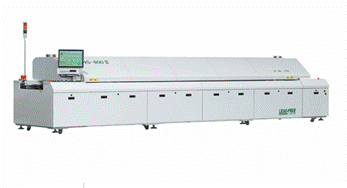
Reflow soldering re-melts solder paste that has been pre-applied to the board pads, forming the mechanical and electrical joints for surface-mount components.
Growing environmental awareness has moved the industry away from tin-lead alloys, because lead is a harmful heavy metal. Lead-free processes use tin-silver-copper alloys and special fluxes, and require higher soldering and preheating temperatures. A cooling zone after the soldering zone helps prevent thermal shock and avoids affecting in-circuit testing (ICT).

2. Why use nitrogen protection?
As assembly density increases and fine-pitch technology becomes common, nitrogen reflow has become the direction of development, improving soldering quality and yield. Its advantages include:
- Reduced oxidation
- Better and faster wetting
- Fewer solder balls and less bridging, for better joint quality
Nitrogen also allows solder paste with lower-activity flux, improves joint performance and reduces discoloration of the base material. The main drawback is cost, which rises with nitrogen consumption: the nitrogen required to reach 50 ppm oxygen in the oven is far greater than that required for 1000 ppm. Solder paste manufacturers are therefore developing no-clean pastes that solder well at higher oxygen levels.
Introducing nitrogen calls for a cost-benefit analysis covering yield, quality improvement and reduced rework or repair. A complete analysis often shows that nitrogen does not increase final cost and can deliver a net benefit.
Most ovens in use are forced-convection types, in which nitrogen consumption is hard to control. Consumption can be reduced by narrowing the oven entrance and exit with baffles, curtains or similar devices, or by designing the heating chamber higher than the entrance and exit. Because hot nitrogen is lighter than air and does not mix with it easily, a natural nitrogen layer forms in the chamber, reducing make-up nitrogen while maintaining the required purity.
To keep trace oxygen in reflow and wave-soldering ovens under control, see LIV-TEK’s Process Trace Oxygen Analyzer (suited to ppm-level measurement) and Trace Oxygen Analyzer (which can modulate a proportional valve from the oven oxygen level to help save nitrogen), or browse the trace oxygen analyzer range. For selection advice, please contact us.
Instrument application example

Relationship between oxygen content and nitrogen flow adjustment

Workflow diagram
